
The Roseate Spoonbill is more than a striking flash of pink in Florida Bay – it’s a vital indicator of the Everglades’ ecological health. “My responsibility as a wildlife ecologist is to determine how birds like the Roseate Spoonbill, that rely on the coastal mangrove habitats of the Everglades and Florida Bay, are responding to climate-change and hydrological restoration,” says Mark Cook. That work often takes him into the field – and sometimes, into the air.

On the day he captured his award-winning image, Mark was following a group of breeding adults from a helicopter, tracking where they foraged to better understand their habitat requirements.
From his unusual vantage point directly above the birds, he looked down on the shallow, milky-azure waters of Florida Bay. The pastel sweep of water and the rose-pink of the spoonbills formed a natural color harmony, the kind of rare composition that wildlife photographers dream of. And then, another player entered the scene: a young lemon shark, gliding just below the surface, foraging for mullet.
The helicopter passed overhead, and he pressed the shutter just in time to capture all the elements in the arrangement he’d hoped for. Beyond its visual impact, Mark hopes the photograph tells a deeper story. He is “always trying to highlight the incredible beauty of the Everglades, Florida Bay and their mangrove habitats,” he says. “Many people do not understand how incredibly beautiful and fascinating these habitats are."
To Mark, the image also highlights the bay’s dynamic biodiversity – a spoonbill’s-eye glimpse into the daily dramas playing out in these waters. “It makes one wonder what other crazy things they see that us humans generally aren’t privy to,” he says.
Throughout his time working in the Everglades, Mark’s connection to the landscape has only deepened. As both scientist and artist, he’s continually inspired by the intricate web of life shaped by the region’s waters. “There’s still so much to learn,” he says. “With so many mysteries yet to uncover, I continue to be drawn back into the swamp to try to unveil them.”
%20copy.jpg)
Mark’s photography began as pure documentation, but over time, he’s shifted toward blending science with art. While he still relishes capturing unusual behavior or vast flocks, he now seeks out images where animals and their habitats interact to form striking shapes, textures, or colors – scenes where nature composes its own artwork.
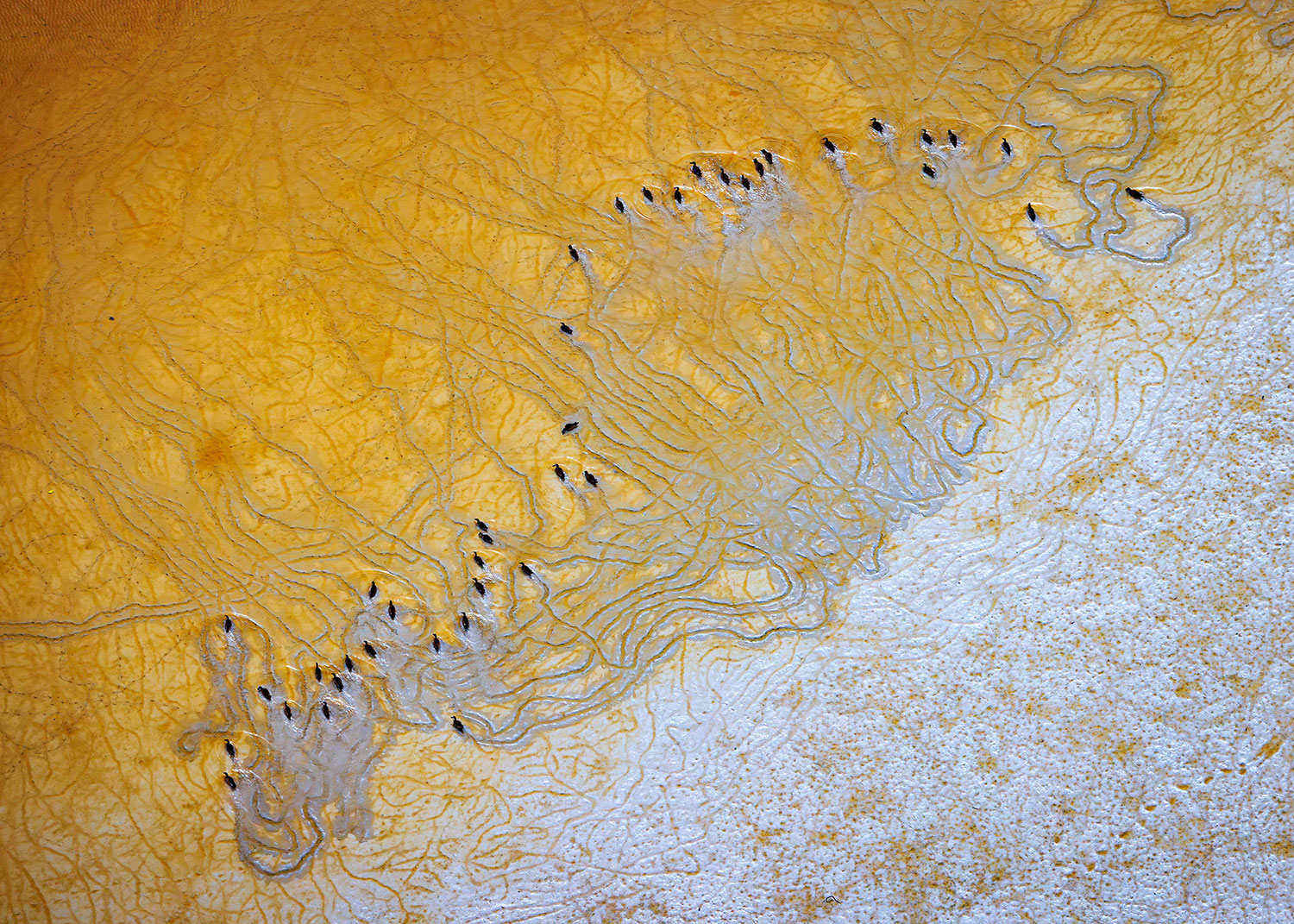
“This might be a new species, a never seen before behavior, or even a familiar or mundane subject captured in a unique way,” he says. “Even a common species shot in a beautiful or dramatic light, with an unusual and artistic composition can be transformed into a highly compelling image.”
With his winning image, Mark invites us to see the Everglades as the spoonbills do – from above, alive with movement, color, and life – and to remember that these moments of wild beauty are worth protecting.

This article was written by Ali Eggling.